
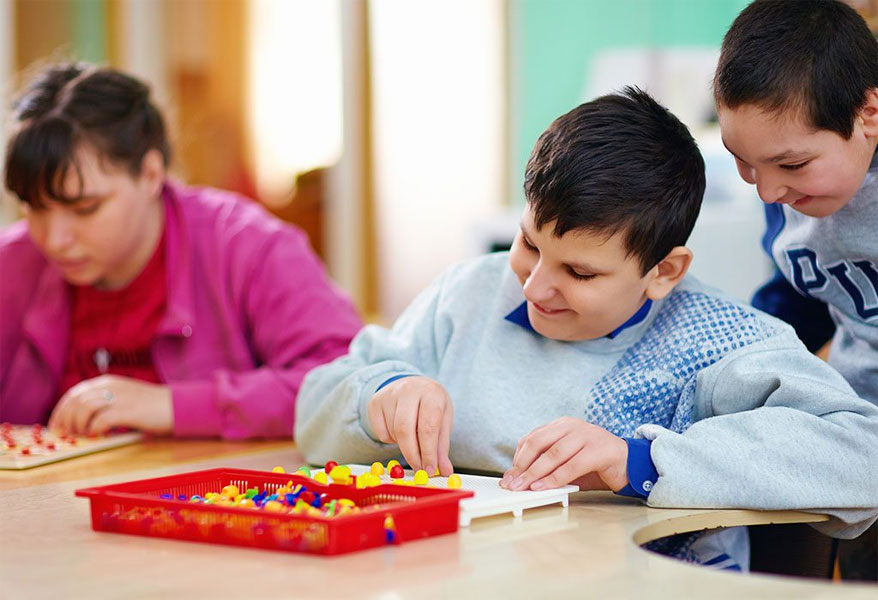
Intellectual Disability / Mental retardation refers to substantial limitations in present functioning. It is characterized by significantly sub average intellectual functioning, existing concurrently with related limitations in two or more of the following applicable adaptive skills areas: communication, self care, home living, social skills, community use, self direction, health and safety, functional academics, leisure, and work. Intellectual Disability manifests before the age of 18.

A short attention span and high energy level don't necessarily mean your child has ADHD—there are many reasons why kids may be hyper or have trouble concentrating. However, some kids struggle more than others to sit still and pay attention, and it causes problems for them in their daily lives if it is not accommodated properly.
If you have a child who seems to bounce off the walls or who can’t focus long enough to get work done, it’s wise to be curious about the possibility of ADHD.
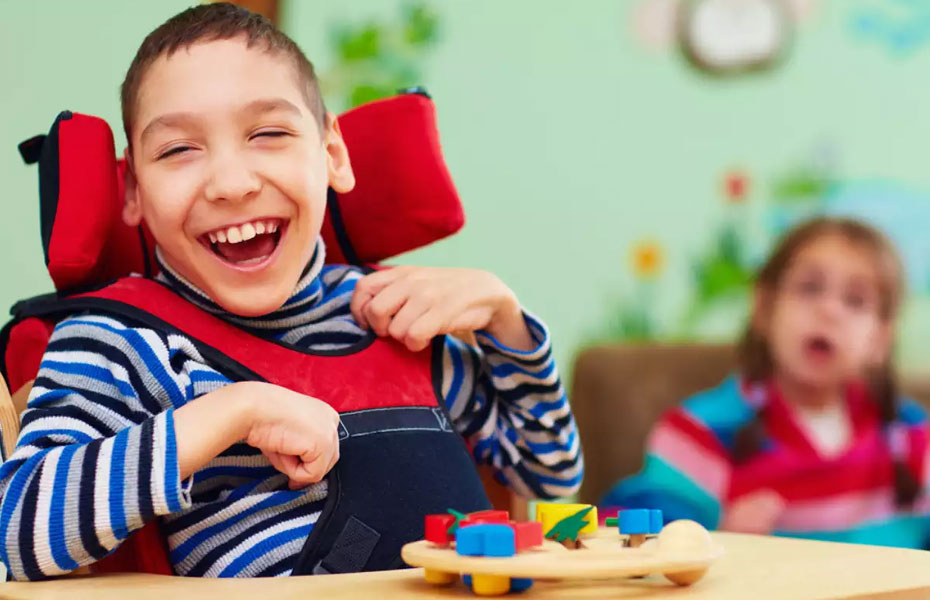
Autism, also known as autism spectrum disorder, is a developmental disorder characterized by communication, social, and behavior challenges. The condition is lifelong and symptoms can vary considerably from one person to the next.
Symptoms involve challenges or differences in motor skills and both intellectual and social abilities. People with autism may learn, act, think, communicate, and interact differently than people who do not have autism spectrum disorder.
Autism is referred to as a spectrum disorder because there is so much variation in terms of the type of symptoms people experience and the severity of those symptoms.

Learning disabilities are due to genetic and/or neurobiological factors that alter brain functioning in a manner which affects one or more cognitive processes related to learning. These processing problems can interfere with learning basic skills such as reading, writing and/or math. They can also interfere with higher level skills such as organization, time planning, abstract reasoning, long or short term memory and attention. It is important to realize that learning disabilities can affect an individual’s life beyond academics and can impact relationships with family, friends and in the workplace.

Slow learners are children of below-average intelligence whose scholastic performance and thinking skills have developed significantly less than the pace of their age. They can be generalized as learners whose learning pace is much lower than their peers. However, they are neither rare nor unique. They cannot learn at the average rate from institutional resources, workbooks, textbooks, and learning materials that are designed for the majority of students in a class.
The IQ of slow learners will be somewhere around 80 and 90 and they will have lower educational attainment than what they are capable of. They will cause deficiency in their reading, writing, and analytical skills and I have a short span of attention and hence get easily distracted by other things. Also, because of their lower pace of learning, they will have lower self-esteem and weaker memory.

An eating disorder is a mental health condition in which the person affected experiences significant disruptions in their eating behaviors as well as in their related thoughts and emotions. People who struggle with eating disorders often become preoccupied with food and their body weight.
Additionally, eating disorders often occur together with other mental health issues like depression, anxiety, panic disorders, and obsessive compulsive disorders. Without treatment, eating disorders can cause a number of health-related problems including cardiovascular issues, gastrointestinal issues, and malnutrition. But with proper treatment, people affected by eating disorders can resume suitable eating habits and can improve their mental health.

Conduct disorder is an ongoing pattern of behavior marked by emotional and behavioral problems. Children with conduct disorder behave in angry, aggressive, argumentative, and disruptive ways.
Conduct disorder in children goes beyond bad behavior. It is a diagnosable mental health condition that is characterized by patterns of violating societal norms and the rights of others. It's estimated that around 3% of school-aged children have conduct disorder. It is more common in boys than in girls.

Even the best-behaved children can be difficult and challenging at times. But oppositional defiant disorder (ODD) includes a frequent and ongoing pattern of anger, irritability, arguing and defiance toward parents and other authority figures. ODD also includes being spiteful and seeking revenge, a behavior called vindictiveness.
These emotional and behavioral issues cause serious problems with family life, social activities, school and work. But as a parent, you don't have to try to manage a child with ODD alone. Your health care provider, a mental health professional and a child development expert can help.
Treatment of ODD involves learning skills to help build positive family interactions and to manage problem behaviors. Other therapy, and possibly medicines, may be needed to treat related mental health conditions.

While a smartphone, tablet, or computer can be a hugely productive tool, compulsive use of these devices can interfere with work, school, and relationships. When you spend more time on social media or playing games than you do interacting with real people, or you can’t stop yourself from repeatedly checking texts, emails, or apps—even when it has negative consequences in your life—it may be time to reassess your technology use.
Smartphone addiction, sometimes colloquially known as “nomophobia” (fear of being without a mobile phone), is often fueled by an internet overuse problem or internet addiction disorder. After all, it's rarely the phone or tablet itself that creates the compulsion, but rather the games, apps, and online worlds it connects us to.

Drug addiction, also called substance use disorder, is a disease that affects a person's brain and behavior and leads to an inability to control the use of a legal or illegal drug or medicine. Substances such as alcohol, marijuana and nicotine also are considered drugs. When you're addicted, you may continue using the drug despite the harm it causes.

As they develop, teenagers will experience a range of emotions and express themselves in many different ways. It’s normal for teenagers to be moody and to show some disrespect and defiance as they go through hormonal changes and a period of brain development during puberty.
Teenagers may also be short-tempered as they naturally begin to seek privacy and independence. They may begin spending more time with their peers or lock themselves in their room away from their parents.
It’s important that you and other caregivers provide support while your teenager is maturing and gaining independence. Guiding your teenager, setting boundaries and forming positive relationships will help them through the challenges of adolescence.